
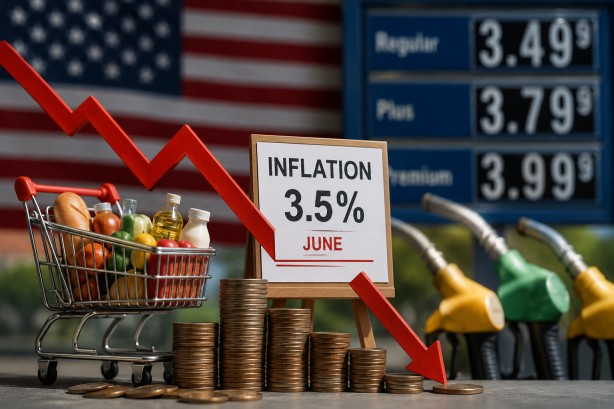
Inflation in the United States has experienced a slowdown, reaching an annual rate of 3.5% in June, primarily due to a temporary drop in energy prices that helped lower overall consumer costs. The latest figures from the Consumer Price Index (CPI) reveal a decrease after several months of higher inflation, with prices falling by 0.8% compared to May. This decline was largely driven by reduced costs for gasoline and fuel, which counterbalanced rising prices in other areas such as food, housing, and utilities.
Core inflation, which strips out the often-volatile categories of food and energy and is a key focus for the Federal Reserve, saw a slight decrease to 2.6% on an annual basis. However, there are concerns that this reduction in inflation might be short-lived. Ongoing tensions in the Middle East have begun to push global oil prices upward once more, leading to increased fuel costs for consumers and higher operating expenses for industries like aviation and transportation.
The Federal Reserve is preparing to examine these latest inflation statistics in conjunction with labor market conditions at its forthcoming policy meeting later this month. While the recent easing of inflation offers some relief, it still exceeds the central bank’s long-term target of 2%, which contributes to lingering uncertainty about when interest rates might be adjusted.
These economic developments highlight the complex and dynamic nature of inflationary pressures and their impact on both consumers and industries. As energy prices fluctuate and global events influence market stability, the balance between controlling inflation and supporting economic growth remains a delicate task for policymakers.