
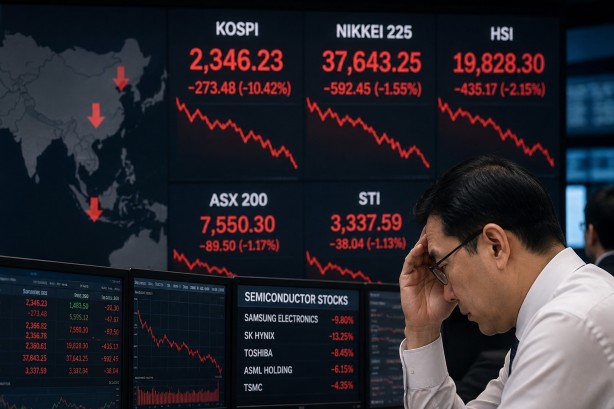
Asian stock markets experienced a downturn on Tuesday, with South Korea’s Kospi index suffering a significant decline of over 10%. The drop was primarily driven by substantial losses in semiconductor stocks, notably Samsung Electronics and SK Hynix, which saw their shares fall by approximately 12%. Investor anxiety has grown due to increasing competition from Chinese AI startups and chipmakers, which threatens to impede the growth of the global artificial intelligence sector.
The market turbulence was not isolated to South Korea; other major Asian indices also ended the day in negative territory. Japan’s Nikkei, Taiwan’s Taiex, Hong Kong’s Hang Seng, and China’s Shanghai Composite all recorded losses. Among the major regional indices, only Australia’s S&P/ASX 200 managed to buck the trend, closing with gains.
Amid the financial market fluctuations, oil prices also saw a decline. This decrease came as tensions between the United States and Iran appeared to ease, sparking optimism for renewed diplomatic discussions. The easing of tensions helped alleviate some concerns over potential disruptions in global energy supplies.
The sharp sell-off in South Korea highlights the volatile dynamics within the technology sector, especially as the competitive landscape becomes increasingly influenced by emerging Chinese players. This development underscores the broader challenges faced by established tech giants in maintaining their market positions amidst rapid technological advancements and shifting global trade dynamics.
Overall, the combination of declining stock indices and falling oil prices paints a complex picture for investors, who must navigate an array of geopolitical and economic factors impacting the markets. As developments continue to unfold, market participants remain attentive to how these conditions will evolve and influence future economic growth prospects.