
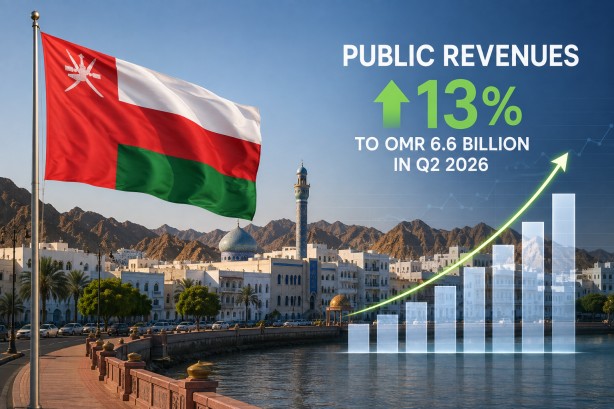
Oman’s public revenues have seen a notable increase of 13% year-on-year, reaching around OMR 6.602 billion by the close of the second quarter of 2026. This rise is primarily attributed to enhanced oil and gas revenues. The Ministry of Finance’s Fiscal Performance Bulletin reveals that this figure is up from OMR 5.839 billion reported during the same period in 2025. Specifically, net oil revenues grew by 10% to OMR 3.332 billion, and net gas revenues surged by 32%, totaling OMR 1.164 billion.
The nation achieved an average realized oil price of $74 per barrel, while daily oil production averaged at approximately 1.074 million barrels. Concurrently, public expenditure also climbed, reaching OMR 6.619 billion, marking a 9% rise from the previous year’s OMR 6.098 billion. Within this expenditure, current spending expanded to OMR 4.369 billion, and development spending by ministries and civil units amounted to OMR 798 million.
Despite the increase in spending, Oman maintained a relatively stable public debt, recorded at OMR 14.16 billion, slightly higher than the OMR 14.12 billion observed during the same timeframe last year. This stability in public debt comes even as the government continues to manage its finances amid rising expenditures.
The recent fiscal data underscores ongoing growth in Oman’s public finances, which are buoyed by robust energy revenues. This growth occurs alongside increased government expenditure during the first half of 2026, reflecting the country’s dynamic economic management in the face of fluctuating global oil prices and production levels.