
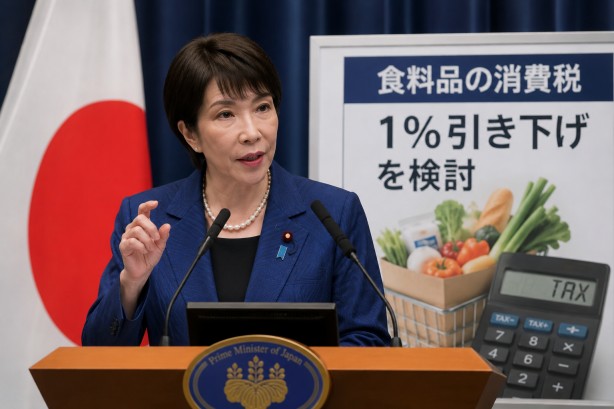
Japanese Prime Minister Sanae Takaichi is poised to direct the ruling Liberal Democratic Party to advance a plan aimed at significantly reducing the consumption tax on food items. This initiative proposes cutting the tax rate from 8% to 1% for a two-year period, starting in April 2027. The move comes amid stalled negotiations on tax reform among various political factions. The government and the ruling coalition are advocating for this temporary tax reduction, which is complemented by cash assistance designed to support low- and middle-income families.
The proposal also encompasses a financial aid package of approximately ¥600 billion, intended to alleviate the burden of the rising cost of living. This measure is part of a broader strategy to provide economic relief to households struggling with expenses. The government’s decision aligns with efforts to address public concerns over affordability and to stimulate economic stability through fiscal policies.
Efforts are underway to finalize the policy by early August, with plans to draft and introduce the necessary legislation during an extraordinary parliamentary session later this year. The objective is to ensure that the tax cut and accompanying financial support are in place by the start of April next year. This timeline underscores the government’s commitment to implementing the changes promptly and efficiently.
The deadlock in cross-party talks has highlighted the challenges in reaching consensus on tax reforms. However, the proposed reduction in the food consumption tax, coupled with direct financial support, reflects a concerted approach to bridging these differences and prioritizing the economic well-being of citizens. As the legislative process unfolds, the government remains focused on securing the required backing to move forward with the plan.